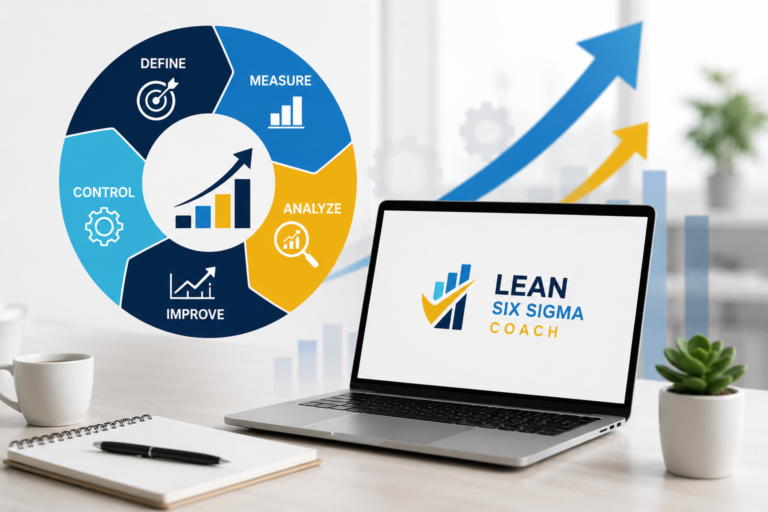
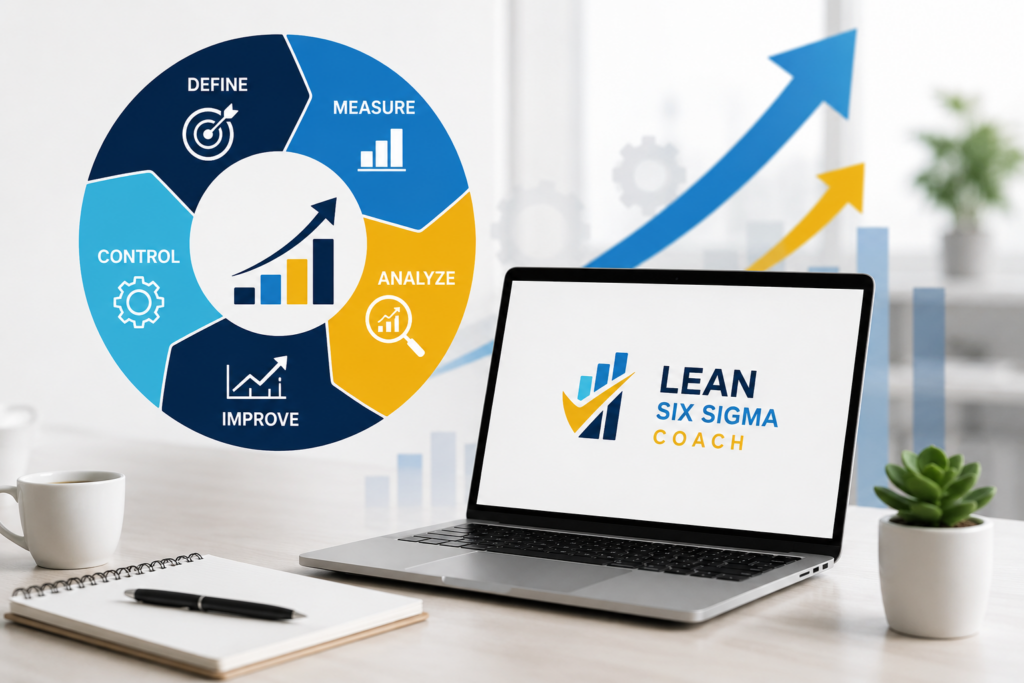
Organizations across industries are expected to deliver higher quality, improve efficiency, and reduce operational costs while adapting to changing customer expectations. Achieving these goals requires structured problem-solving, data-driven decision-making, and a culture of continuous improvement. This is where Lean Six Sigma continues to provide lasting value for both organizations and professionals.
Whether you are entering the workforce, advancing into leadership, or looking to strengthen your organization’s operational capabilities, investing in Lean Six Sigma training can help you develop practical skills that produce measurable business results. Today’s online Lean Six Sigma courses allow professionals to gain recognized credentials while learning at a pace that fits their schedules, making professional development more accessible than ever.
However, choosing the right online Lean Six Sigma training and certification program involves much more than comparing prices. If you plan to pursue certification, it is also important to understand the assessment and practical application requirements for eligible belt levels. The quality of training, accreditation, learning resources, training pathway, and post-course support all influence the value of your investment. Understanding these factors helps ensure your certification supports both your immediate learning objectives and long-term career growth.
At Lean Six Sigma Coach, effective training combines practical application, accredited learning, and structured learning pathways that support long-term professional growth. Whether you are pursuing your first certification or preparing for advanced process improvement roles, selecting the right learning partner can make a significant difference in your success.
This comprehensive guide explains how Lean Six Sigma works, explores learning pathways, discusses how to evaluate online training providers, examines certification options, and outlines the factors that influence certification costs while helping you maximize your return on investment.
Choosing the right Lean Six Sigma training is about more than earning a credential. This guide explains how to select the right training pathway, evaluate online training providers, understand certification costs, and maximize the long-term value of your investment. By the end, you’ll have a clear framework for choosing a Lean Six Sigma program that supports your career goals and professional growth.
Why Lean Six Sigma Continues to Be One of the Most Valuable Professional Certifications
Organizations increasingly seek professionals who can improve efficiency while maintaining consistent quality. Rather than relying on intuition alone, Lean Six Sigma provides a proven methodology for identifying process inefficiencies, eliminating waste, reducing variation, and delivering measurable improvements.
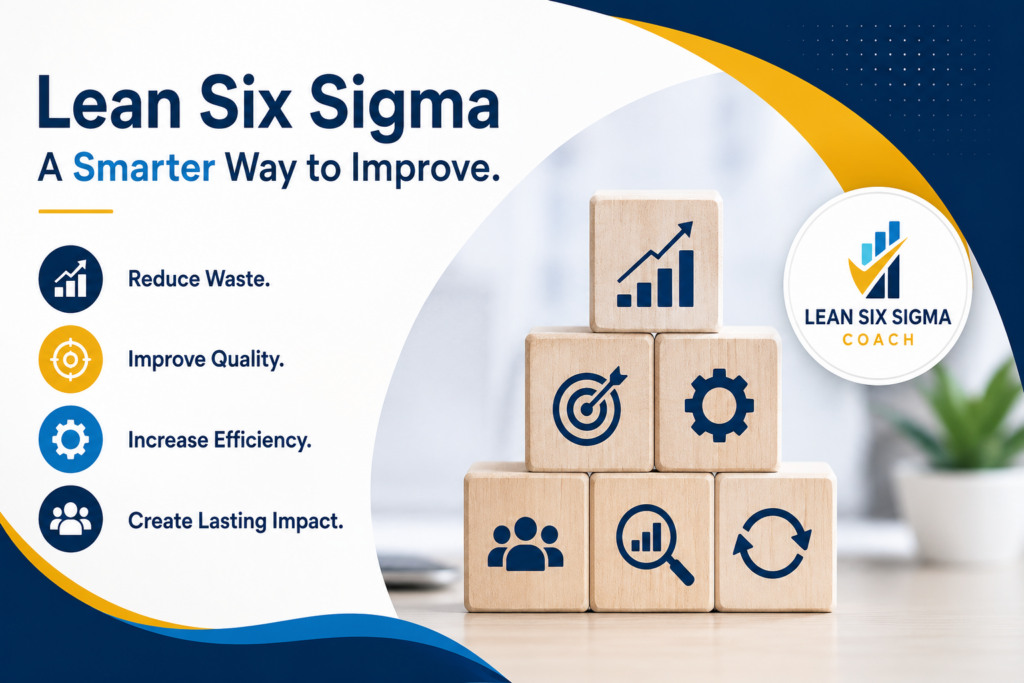
Unlike many professional certifications that focus primarily on theoretical knowledge, Lean Six Sigma emphasizes solving real business problems. Professionals learn structured improvement methods that can immediately be applied to manufacturing, healthcare, finance, logistics, technology, government, and service industries.
As organizations continue investing in operational excellence initiatives, Lean Six Sigma certification remains one of the most respected credentials for professionals responsible for driving continuous improvement.
Ready to build valuable process improvement skills? Explore the comprehensive online training programs from Lean Six Sigma Coach to begin your certification journey with confidence.
How Lean and Six Sigma Work Together
Although Lean and Six Sigma originated as separate improvement methodologies, combining them creates a comprehensive framework for operational excellence.
Lean focuses on improving workflow by identifying and eliminating activities that do not add value from the customer’s perspective. These non-value-adding activities may include excessive waiting, unnecessary transportation, inventory accumulation, overproduction, defects, excessive processing, unnecessary movement, and underutilized talent.
Six Sigma approaches improvement differently by concentrating on reducing process variation through statistical analysis. Rather than simply making processes faster, Six Sigma ensures they become more predictable, stable, and capable of consistently producing quality outcomes.
When these two methodologies work together, organizations improve both efficiency and quality simultaneously.
For example, a manufacturing company may use Lean techniques to reduce production bottlenecks while applying Six Sigma tools to minimize product defects. A healthcare provider may streamline patient admissions using Lean while reducing documentation errors through Six Sigma analysis. Financial institutions often combine both approaches to improve approval processes while maintaining compliance and accuracy.
The integration of these complementary methodologies creates sustainable operational improvements that benefit customers, employees, and organizations alike.
Industries That Benefit From Lean Six Sigma
One reason Lean Six Sigma continues to grow in popularity is its adaptability across virtually every industry.
Manufacturing organizations use Lean Six Sigma to reduce waste, improve production efficiency, increase equipment utilization, and strengthen quality management systems.
Healthcare providers implement continuous improvement initiatives to reduce patient waiting times, improve clinical workflows, standardize procedures, and enhance patient safety.
Financial institutions improve loan processing, regulatory compliance, customer service, fraud prevention, and operational efficiency through structured process improvement.
Technology companies optimize software development, service management, project delivery, and support operations using Lean Six Sigma principles.
Government agencies improve public service delivery by reducing administrative delays, improving documentation accuracy, and maximizing resource utilization.
Retail organizations enhance inventory management, distribution efficiency, customer service, and supply chain performance. Logistics companies improve transportation planning, warehouse operations, and fulfillment accuracy.
Because every organization depends on efficient processes, Lean Six Sigma professionals remain in demand across diverse industries.
Career Advantages of Certification
Professional certification demonstrates much more than technical knowledge. It shows employers that an individual understands structured problem-solving and can contribute to measurable organizational improvements.
Professionals who complete Lean Six Sigma training and, where applicable, pursue Certification frequently becomes involved in initiatives focused on:
- Process improvement
- Operational excellence
- Quality management
- Project leadership
- Business transformation
- Risk reduction
- Customer satisfaction
- Cost optimization
In addition to strengthening technical capabilities, Lean Six Sigma training develops valuable transferable skills, including analytical thinking, data interpretation, leadership, communication, project management, and change management.
As professionals gain practical experience, completing training and, where applicable, achieving Certification can support career advancement into supervisory, managerial, consulting, and executive leadership roles.
Understanding Lean Six Sigma Learning Pathways Before You Enroll
Every professional begins their Lean Six Sigma journey with different levels of experience, technical knowledge, and career aspirations. Selecting the appropriate training pathway ensures your learning experience aligns with your current responsibilities while preparing you for future opportunities.
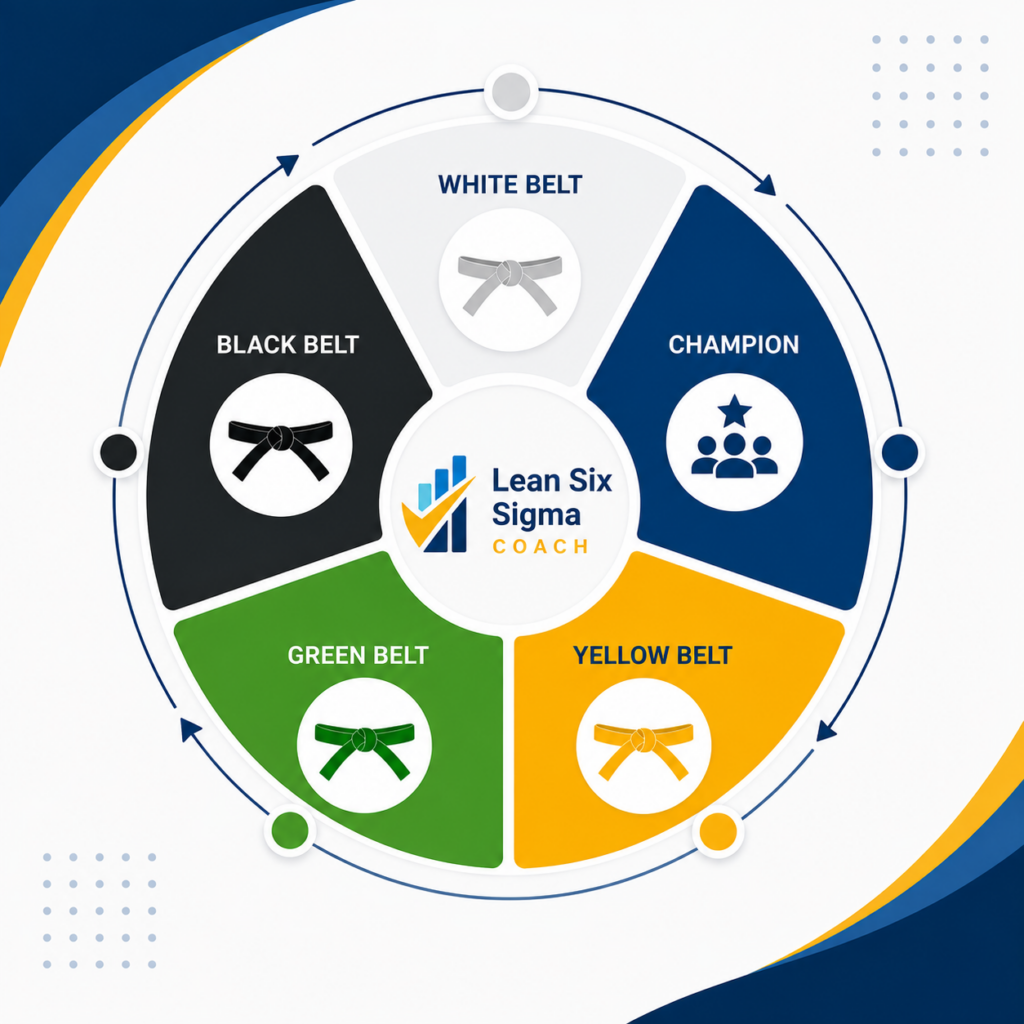
Rather than immediately pursuing the highest certification level, most learners benefit from following a structured progression that builds knowledge and confidence over time.
Not sure which certification level matches your experience? Lean Six Sigma Coach offers structured learning pathways that help professionals choose the certification that aligns with their career goals.
White, Champion, Yellow, Green, and Black Belt Programs
Lean Six Sigma Coach offers a comprehensive range of Lean, Lean Six Sigma, and Six Sigma Certificate programs designed to support professionals at every stage of their continuous improvement journey. These structured learning pathways progressively expand technical knowledge, practical improvement skills, and leadership capabilities while allowing learners to select the Certificate program that best aligns with their experience and career goals.
The White Belt introduces the fundamentals of Lean and Six Sigma while building awareness of continuous improvement, workplace organization, problem identification, and process awareness through practical introductory tools.
The Champion program prepares managers, supervisors, and organizational leaders to sponsor improvement initiatives, align projects with strategic objectives, and foster a culture of continuous improvement across their teams.
The Yellow Belt develops practical problem-solving skills by introducing process improvement tools, such as process mapping and root cause analysis, while preparing learners to actively support and participate in improvement projects using Lean and Six Sigma methods. As described in the other Yellow Belt references on the site, Yellow Belts are trained to facilitate small,(kaizen), rapid improvement projects.
The Green Belt prepares professionals to lead improvement projects by applying the DMAIC methodology, statistical analysis, and structured problem-solving to improve processes, reduce variation, and deliver measurable business results.
The Black Belt develops advanced expertise in statistical analysis, organizational change, project leadership, and enterprise-wide process improvement, enabling professionals to lead complex cross-functional initiatives and support continuous improvement strategies across the organization.
In addition to Lean and Lean Six Sigma Certificate programs, Lean Six Sigma Coach also offers Six Sigma Green Belt and Six Sigma Black Belt Certificate programs for professionals who want to develop advanced statistical analysis and process improvement capabilities within a Six Sigma-focused learning pathway.
Although the learning pathways are designed to expand knowledge and capabilities progressively, learners are not required to complete each previous belt before enrolling in a higher-level Certificate program. Higher-level Certificate programs include the required courses from earlier belts, allowing professionals to begin at the level that best aligns with their experience, responsibilities, and career goals.
Choosing the Right Learning Path
Choosing the right certification depends on your current experience, professional responsibilities, and long-term objectives.
Professionals new to process improvement often begin with a White Belt or Yellow Belt Certificate, while others enroll directly in the Green Belt based on their experience and career objectives. Higher-level Certificate programs include the required learning from earlier belts, so prior completion of lower belts is not mandatory.
Project managers, engineers, supervisors, quality professionals, and operations managers often start with the Green Belt because it provides practical tools for leading improvement initiatives immediately. However, choosing the pathway that aligns with your goals is the best way to grow.
Experienced continuous improvement professionals with project leadership experience may pursue Black Belt certification to strengthen their advanced analytical and leadership capabilities.
When selecting your pathway, consider your current role, desired career progression, previous analytical experience, and the types of improvement projects you expect to manage.
Before enrolling in any program, it is valuable to understand how each certification level supports different professional objectives.
Related Reading: A Complete Guide to Lean Six Sigma Training and Certification Pathways
Self-Paced vs. Instructor-Led Learning
Online learning has transformed professional education by providing flexible options for busy working professionals.
Self-paced programs allow learners to complete coursework according to their own schedules. Students can revisit lessons, progress at a comfortable pace, and balance training alongside full-time employment.
While some providers offer instructor-led or blended delivery, many professionals prefer flexible, self-paced learning that lets them study on their own schedule without disrupting work or personal commitments.
When comparing learning formats, evaluate factors such as project guidance, learning resources, practice examinations, and long-term support instead of focusing solely on course duration.
The best learning environment is one that complements both your schedule and your preferred learning style. Lean Six Sigma Coach delivers flexible, self-paced online learning that allows professionals to study at their own pace while maintaining full-time work and personal commitments. Learners receive structured courses, practical resources, and ongoing access to support materials that help reinforce concepts long after completing training.
Ready to strengthen your process improvement skills? Explore Lean Six Sigma Coach’s online training programs and find the certification path that’s right for you.
How to Choose the Right Online Lean Six Sigma Courses
Not every online certification program provides the same learning experience. Course quality can vary significantly depending on curriculum design, student support, certification preparation, and practical application.
Evaluating these differences before enrolling helps ensure that your investment yields meaningful professional results rather than simply completing a training program.
Compare complete online learning experiences before enrolling. Discover how Lean Six Sigma Coach combines comprehensive training, accredited learning, and practical resources to support your long-term success.
Features of a Complete Training Package
A high-quality Lean Six Sigma course should extend beyond recorded video lessons.
The most comprehensive programs typically include structured learning modules, downloadable reference materials, interactive exercises, learning pathways, access to an online learning library via a monthly all-access subscription, practice examinations, project templates, statistical tools, case studies, quizzes, and certification preparation resources.
Practical application is equally important. Opportunities to work through realistic business scenarios help learners develop confidence before applying Lean Six Sigma techniques in professional environments.
Comprehensive training packages also include ongoing access to learning materials, allowing professionals to revisit key concepts long after certification.
Learning Resources
Learning should combine practical application, structured Certificate pathways, accredited course content, and comprehensive learning resources that support continuous professional development.
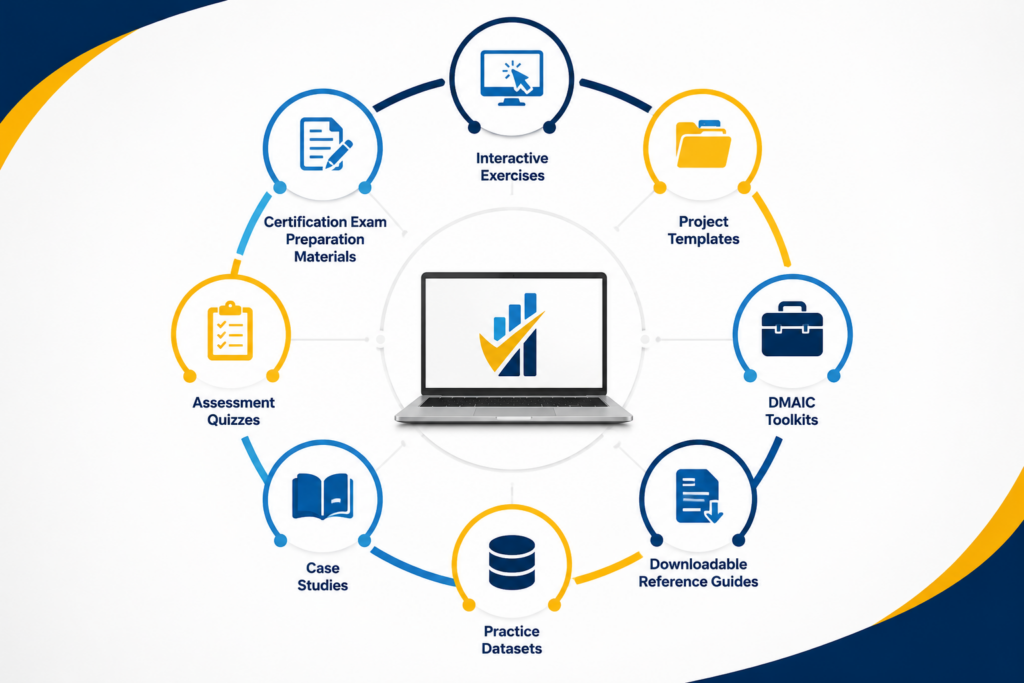
Well-developed programs often include:
- Interactive exercises
- Project templates
- DMAIC toolkits
- Downloadable reference guides
- Practice datasets
- Case studies
- Assessment quizzes
- Certification exam preparation materials
These resources reinforce key concepts while supporting independent learning and practical application.
Questions to Ask Before Enrolling
Before selecting an online certification program, ask several important questions.
Does the curriculum align with recognized Lean Six Sigma methodologies?
Does the program include project-based learning?
What learning resources remain available after certification?
Are practice examinations included?
Does the provider offer continued learning opportunities after certification?
Evaluating these factors helps distinguish comprehensive professional development programs from basic online courses that provide limited long-term value.
Related Reading: How to Choose a Lean Six Sigma Course With a Complete Training Package
Discover how Lean Six Sigma Coach can help you gain industry-recognized certification through flexible online training.
Comparing Lean Six Sigma Certification Online Options
Selecting the right certification provider is just as important as choosing the appropriate certification level. While many organizations offer Lean Six Sigma Certification online, the overall learning experience, industry recognition, and long-term value can differ significantly.
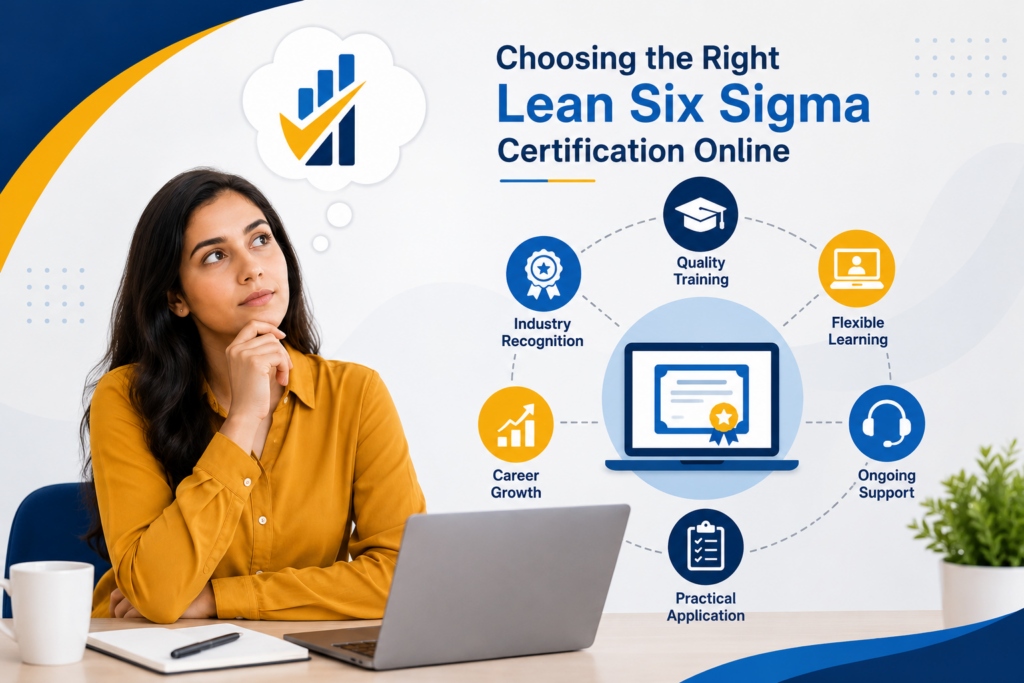
A well-structured training program should not only prepare you for assessments and, where applicable, Certification requirements, but also equip you with the knowledge and confidence to lead improvement initiatives in real business environments. Carefully comparing providers helps ensure your investment contributes to meaningful professional development rather than simply adding another credential to your résumé.
When evaluating providers, it is also worth considering accreditation and the quality of the learning ecosystem. Lean Six Sigma Coach, operated by RPM Academy, delivers accredited online learning pathways that emphasize practical application, flexible self-paced study, and long-term professional development, helping learners build skills they can apply with confidence.
Looking for an industry-recognized certification program? Explore Lean Six Sigma Coach online certification options designed to help professionals build practical skills, earn recognized credentials, and apply continuous improvement methods with confidence.
Accreditation and Industry Recognition
One of the first factors to evaluate is whether the certification provider has established credibility within the Lean Six Sigma community. Industry recognition gives employers greater confidence that your certification reflects comprehensive training and practical competency.
Although accreditation standards vary across providers, reputable organizations typically follow widely accepted Lean Six Sigma methodologies while maintaining consistent curriculum quality and rigorous assessment standards.
Rather than selecting a provider based solely on marketing claims, review factors such as:
- Years of experience delivering Lean Six Sigma education
- Reputation within professional industries
- Student success stories
- Quality of instructional materials
- Consistency of certification standards
- Practical learning methodology
Employers generally value certifications that demonstrate both theoretical understanding and the ability to apply improvement techniques in workplace settings.
At Lean Six Sigma Coach, our certification programs are designed to balance foundational knowledge with practical application, helping learners develop skills that extend beyond examination preparation.
Certification Exams and Project Requirements
Certification assessments vary considerably among providers.
Some organizations rely entirely on multiple-choice examinations, while others incorporate project work, practical assignments, case studies, or scenario-based evaluations that require learners to demonstrate their understanding of Lean Six Sigma tools.
Programs that include practical application often provide stronger preparation because learners experience how improvement methodologies function in real operational environments.
Depending on the provider and certification level, assessments may include:
- Online examinations
- Practical case studies
- Process analysis exercises
- Statistical interpretation
- DMAIC project planning
- Improvement project documentation
- Final certification assessments
For eligible belt levels, Certification typically requires successful completion of training, passing the required assessment, and demonstrating practical application of Lean Six Sigma methods.
Before enrolling, review the assessment methodology to ensure it aligns with your preferred learning style and career objectives.
Student Support After Certification
Learning should not end once training is complete.
One characteristic that separates outstanding providers from basic online training platforms is the quality of ongoing learner support. Continuous access to educational resources allows professionals to reinforce concepts as they begin applying Lean Six Sigma in their organizations.
Post-certification support may include:
- Continuing education resources
- Updated learning materials
- Continued access to resources
- Advanced certificate pathways
These resources become especially valuable as professionals gain practical experience and encounter increasingly complex improvement challenges.
When comparing providers, consider the long-term relationship they offer rather than focusing only on the initial course experience.
Related Reading: What Is the Best Online Lean Six Sigma Training and Certification Provider for Professionals?
Take the next step in your professional development with Lean Six Sigma Coach and build practical skills that support long-term career success.
Understanding the Cost of Lean Six Sigma Certification
The cost of Lean Six Sigma Certification varies considerably depending on several factors, including certification level, learning format, included resources, and assessment requirements. Understanding what influences pricing helps professionals evaluate overall value instead of simply selecting the lowest-cost option.
Training should be viewed as an investment in professional development rather than an expense. A comprehensive certification program often provides substantially greater long-term value than a lower-priced course with limited educational support.
Invest in training that delivers lasting value. Learn what is included in Lean Six Sigma Coach certification programs and choose a learning experience designed to support your long-term professional success.
Certification Level and Pricing
Certification level remains one of the most significant pricing factors.
Entry-level certifications generally require fewer instructional hours and introduce fundamental concepts, making them more affordable for individuals beginning their Lean Six Sigma journey.
Intermediate certifications such as Green Belt typically include more comprehensive instruction, practical assignments, analytical tools, and project application, resulting in higher overall training costs.
Advanced certifications such as Black Belt, involve extensive coursework, advanced statistical methods, leadership development, project coaching, and rigorous assessments. These programs naturally require greater instructional resources and longer learning commitments.
Selecting the appropriate certification should depend on your professional goals, rather than on assuming that the highest level always provides the greatest value.
Included Resources and Exam Fees
Comparing prices without examining what each program includes can be misleading.
Some certification providers bundle multiple educational resources into a single package, while others charge separately for practice examinations, project templates, reference materials, certification testing, or post-course support.
When comparing programs, consider whether tuition includes:
- Certificate program
- Practice exams
- Downloadable resources
- Project templates
- Statistical tools
- Course updates
- Certificate issuance
- Continuing education materials
Evaluating the complete learning package provides a more accurate understanding of overall value.
Evaluating Value Instead of Price Alone
The lowest-priced certification is not always the strongest investment.
A well-designed training program, supported by a self-paced curriculum, comprehensive resources, practical exercises, and ongoing learning opportunities, often yields significantly greater career benefits than inexpensive programs with minimal educational support.
Professionals should evaluate overall educational quality, practical applicability, industry recognition, and long-term learning opportunities alongside tuition costs.
This broader perspective helps ensure your certification contributes to sustained career growth rather than simply satisfying a short-term credential requirement.
Related Reading: How Much Does Lean Six Sigma Certification Cost Online and What Influences Pricing?
Maximizing the Value of Your Lean Six Sigma Certification
Completing your training and earning your Certificate is only the beginning of your continuous improvement journey. The greatest return on investment comes from consistently applying Lean Six Sigma principles to real workplace challenges while continually expanding your knowledge and experience.
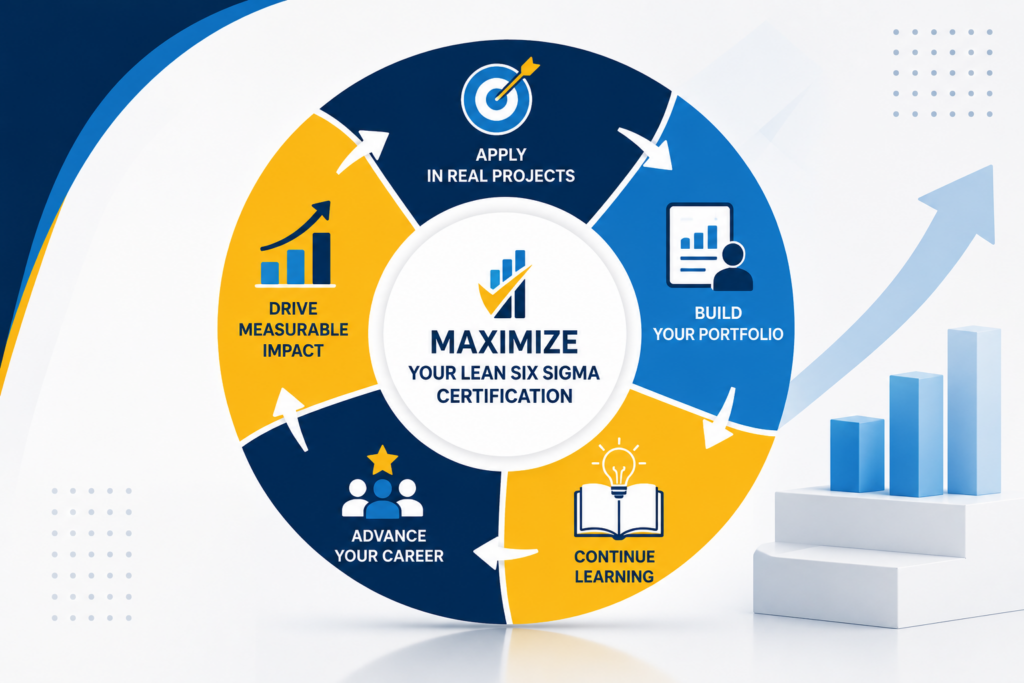
Professionals who actively use their training often strengthen both their technical expertise and leadership capabilities over time.
Turn your certification into measurable career growth. Continue developing your expertise through advanced learning opportunities, practical projects, and ongoing professional development with Lean Six Sigma Coach.
Applying Lean Six Sigma in Real Projects
Practical application reinforces classroom learning while building professional credibility.
Begin by identifying opportunities for improvement within your current responsibilities. Even relatively small projects involving process mapping, waste reduction, workflow improvement, or quality enhancement provide valuable opportunities to practice Lean Six Sigma methodologies.
Applying tools such as DMAIC, root cause analysis, value stream mapping, and process measurement helps transform theoretical knowledge into practical experience.
Each completed project also strengthens your confidence while demonstrating measurable business impact to employers and organizational leadership.
Building a Professional Project Portfolio
A portfolio documenting completed improvement initiatives becomes an important professional asset throughout your career.
Rather than simply listing certifications on a résumé, professionals can demonstrate measurable accomplishments by documenting:
- Business challenges addressed
- Improvement methodology used
- Data collected
- Solutions implemented
- Results achieved
- Lessons learned
This evidence-based approach clearly demonstrates your ability to apply Lean Six Sigma principles in practical business situations.
A strong project portfolio also supports career advancement, consulting opportunities, leadership positions, and future certification progression.
Continuing Professional Development
Continuous improvement applies equally to personal learning.
As industries evolve, professionals benefit from expanding their knowledge through advanced certifications, specialized workshops, professional conferences, industry publications, and ongoing education.
Lean Six Sigma Coach offers structured learning pathways that allow professionals to continue expanding their knowledge through progressively advanced Certificate programs while avoiding unnecessary repetition of previously completed coursework. Because higher-level Certificate programs include earlier learning, professionals may also enter directly at the level that best aligns with their experience and objectives.
At Lean Six Sigma Coach, learners have access to structured certificate pathways that support long-term professional growth while encouraging continuous development beyond initial certification.
Investing in lifelong learning ensures your Lean Six Sigma knowledge remains relevant as organizations continue adopting increasingly sophisticated process improvement strategies.
Lean Six Sigma continues to be one of the most valuable professional development investments for individuals seeking to improve business processes, strengthen analytical thinking, and advance their careers. Its structured methodology enables professionals to reduce waste, improve quality, increase operational efficiency, and deliver measurable organizational results across virtually every industry.
Choosing the right training program requires careful consideration of Certificate pathways, course quality, accreditation, learning resources, assessment methods, and overall value. Rather than focusing solely on certification costs, professionals should evaluate how well a program prepares them to apply Lean Six Sigma principles in real business environments.
Whether you are beginning with your first certification or preparing for advanced leadership roles, selecting a trusted training provider can significantly influence your long-term success.
Why Choose Lean Six Sigma Coach?
Lean Six Sigma Coach, operated by RPM Academy, provides accredited online Lean Six Sigma courses designed for professionals, teams, and organizations. As an accredited partner of the International Lean Six Sigma Institute (ILSSI), the platform delivers flexible, self-paced learning supported by structured Certificate pathways that help learners build practical process improvement and leadership skills.
Learners also benefit from a comprehensive online learning library available through a convenient monthly all-access subscription, providing ongoing access to courses, tools, and resources that support continuous professional development.
Advance Your Career With Lean Six Sigma Coach
Whether you are beginning your Lean Six Sigma journey or preparing for advanced certification, Lean Six Sigma Coach provides comprehensive online training, accredited learning, practical learning resources, and flexible learning pathways designed to help professionals achieve lasting success. Explore our online programs today and take the next step toward process excellence, stronger leadership, and long-term career growth.
Frequently Asked Questions